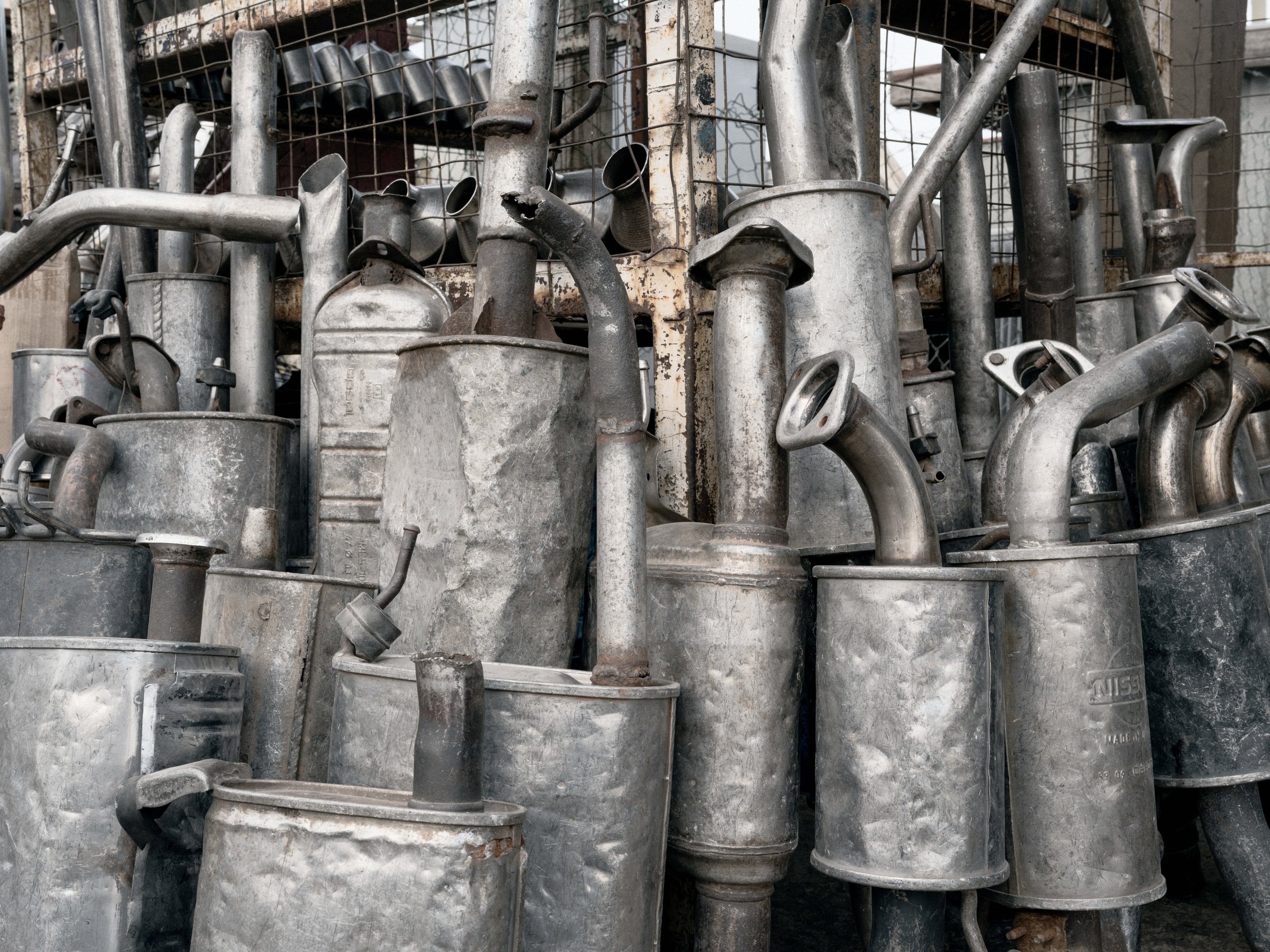
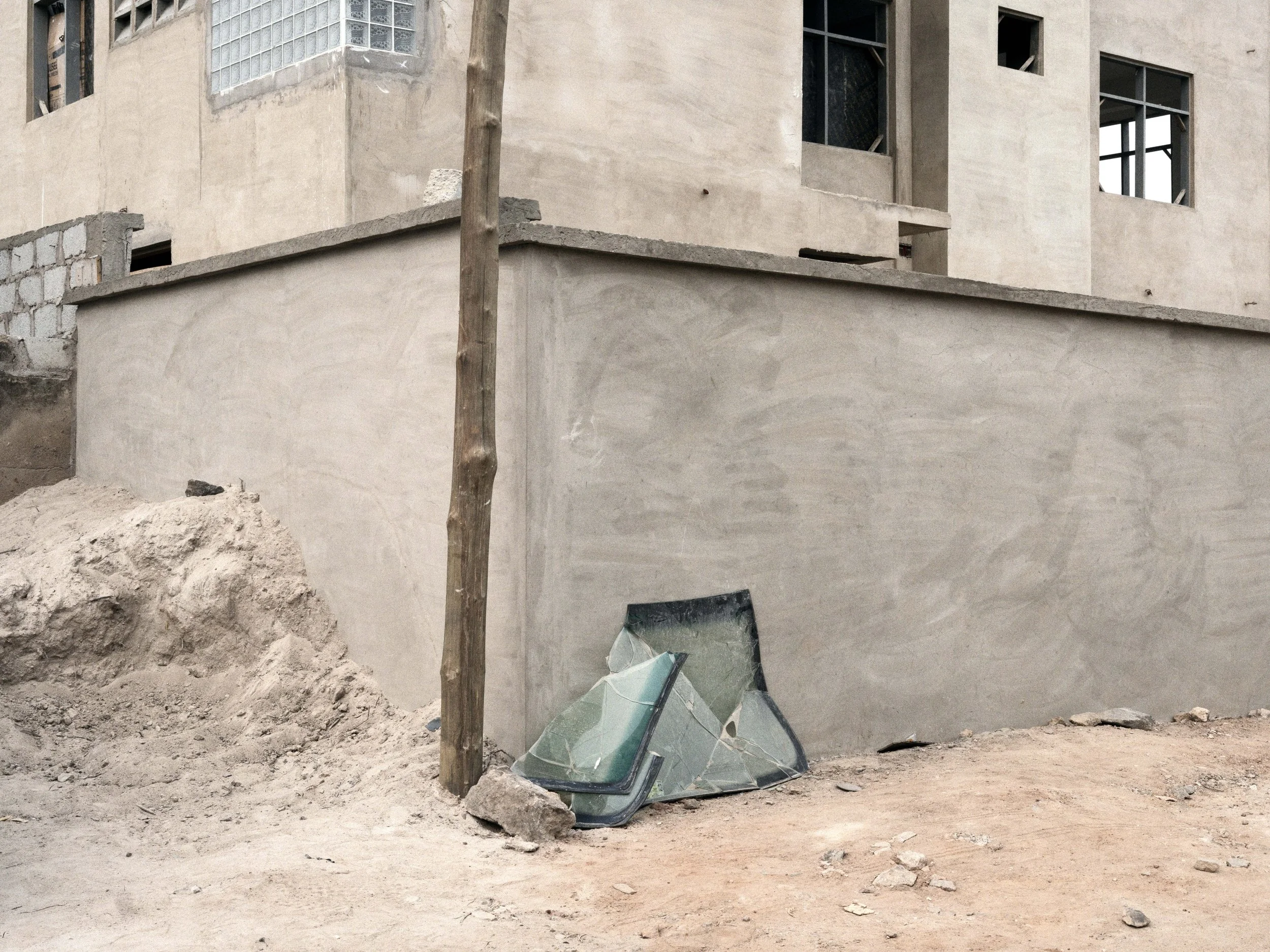
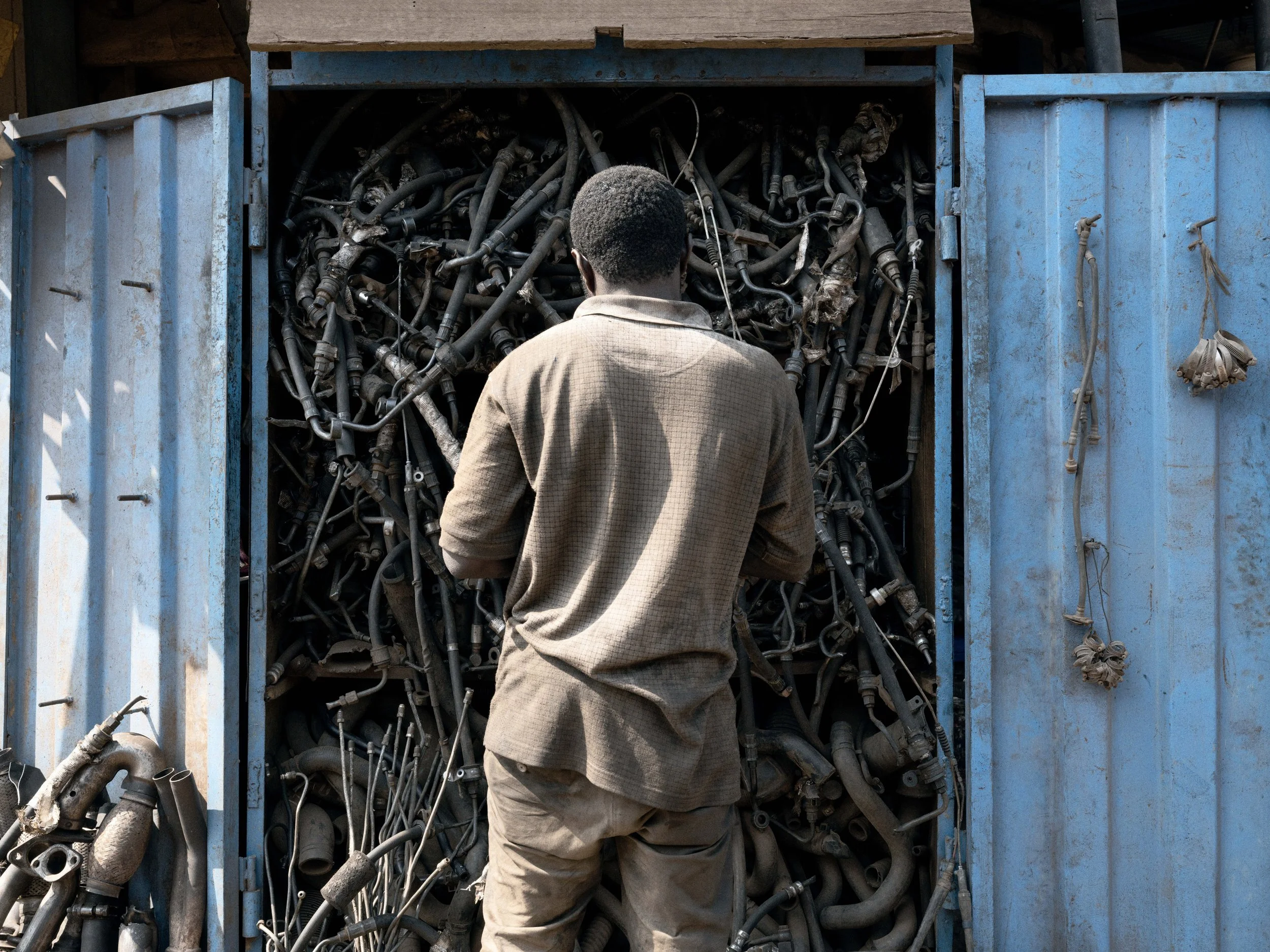
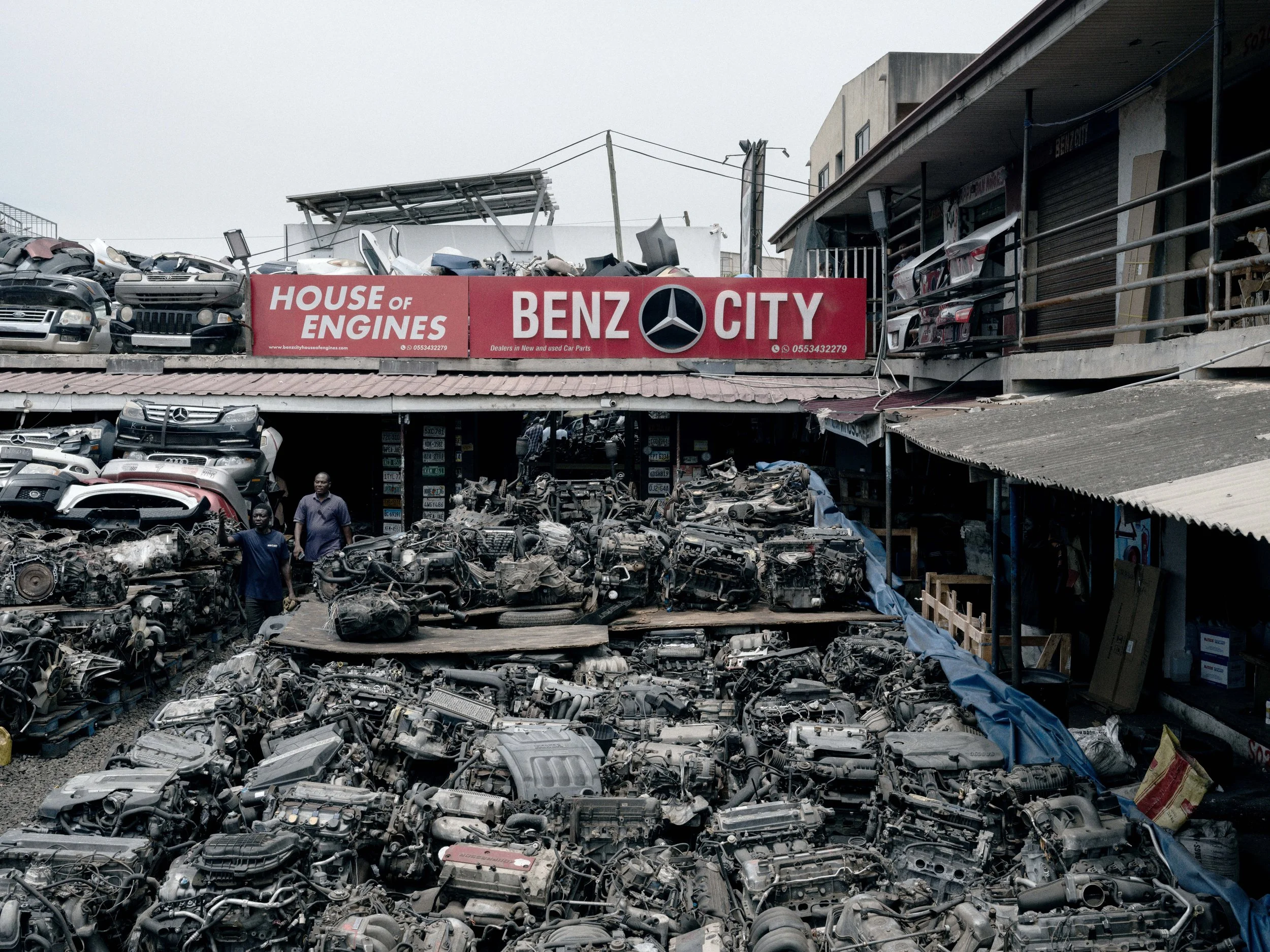
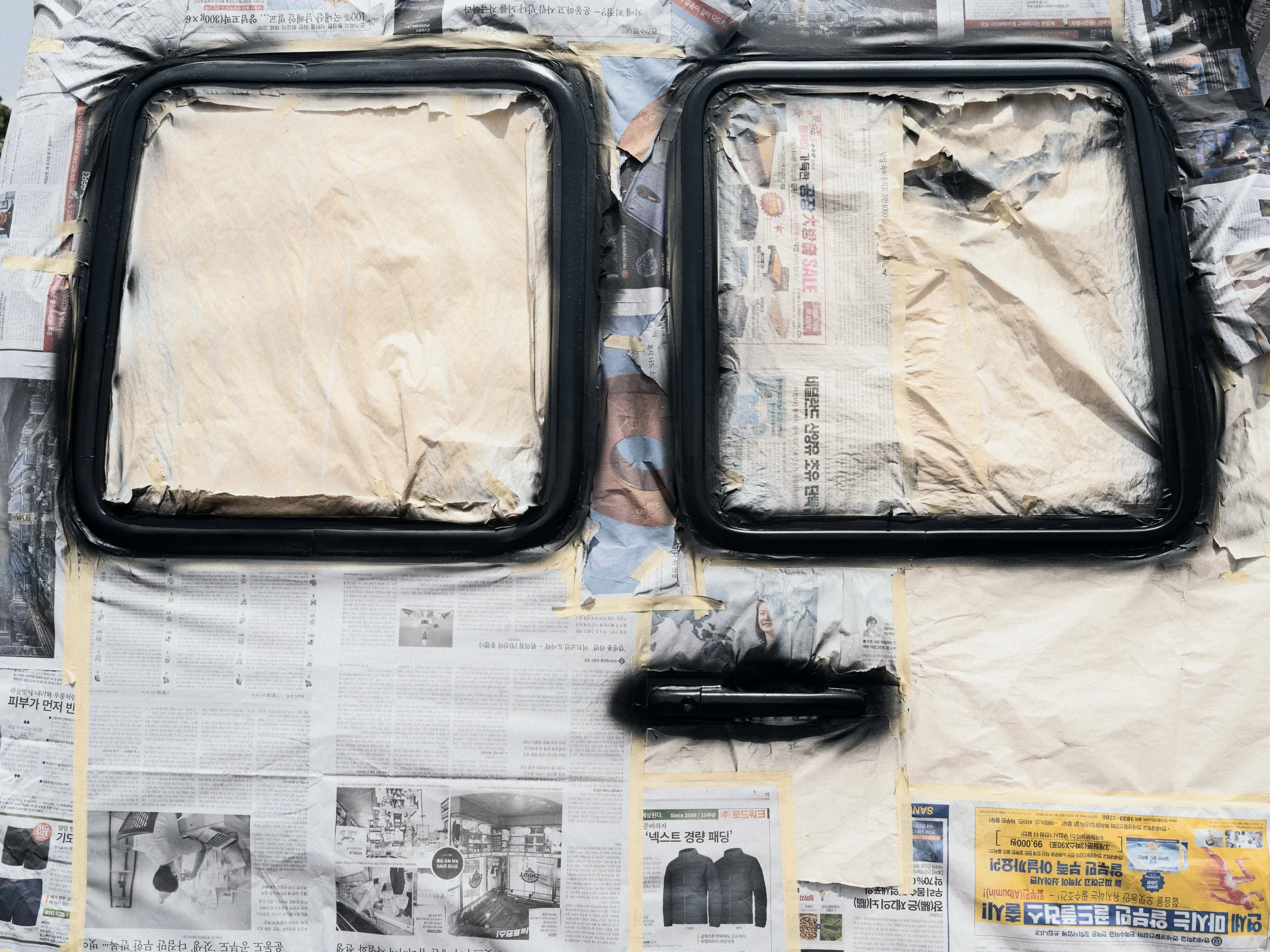
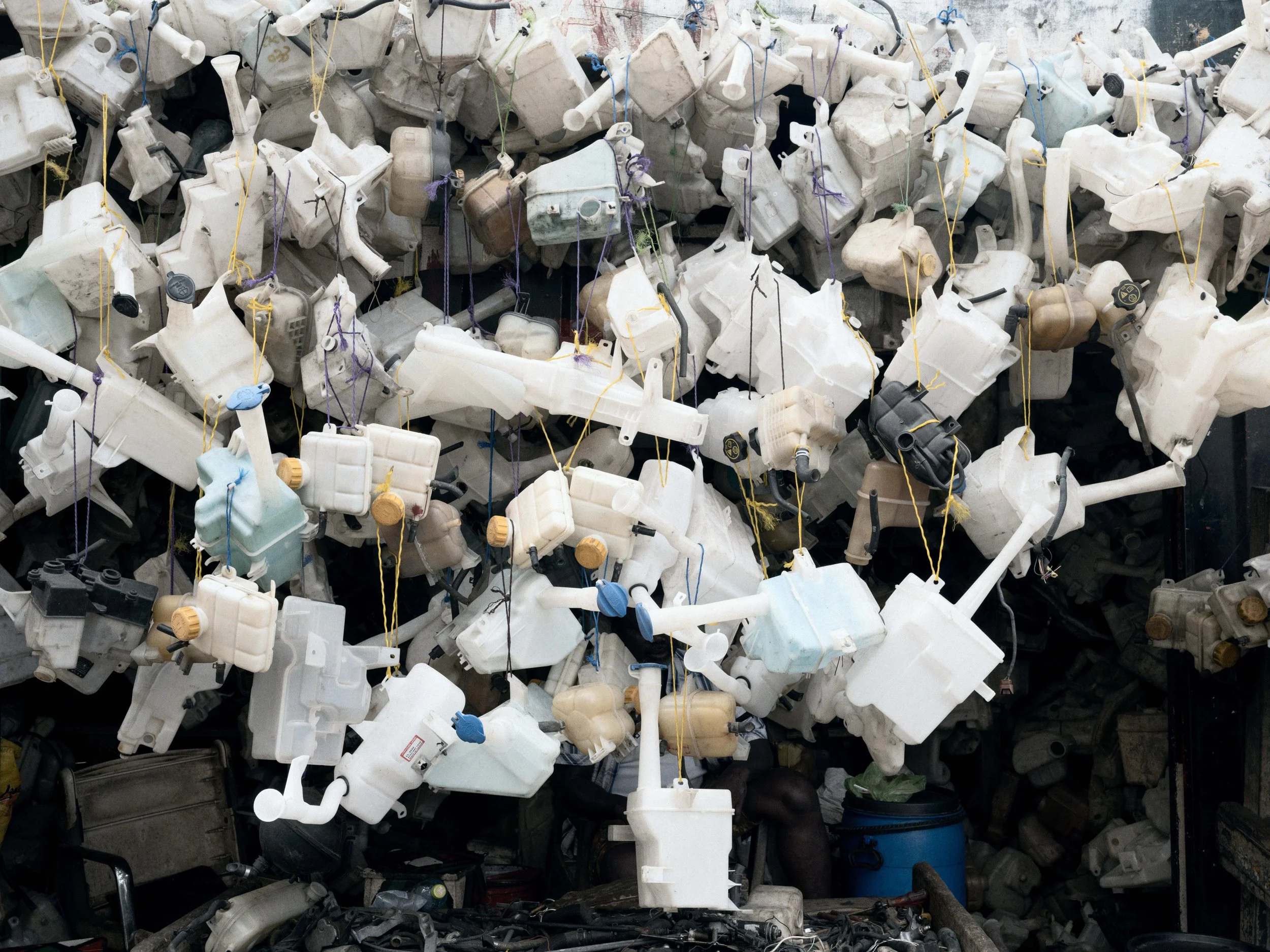
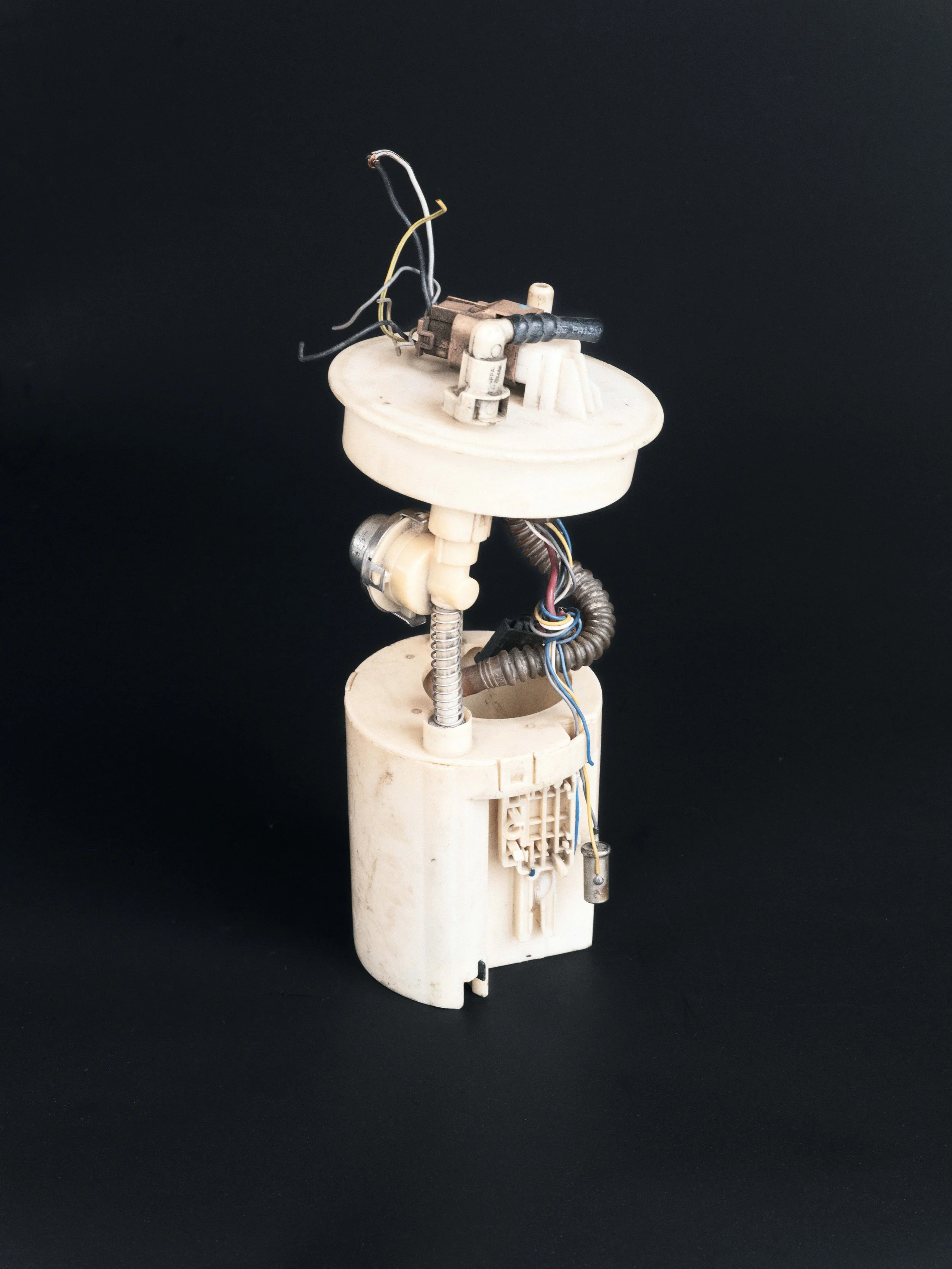
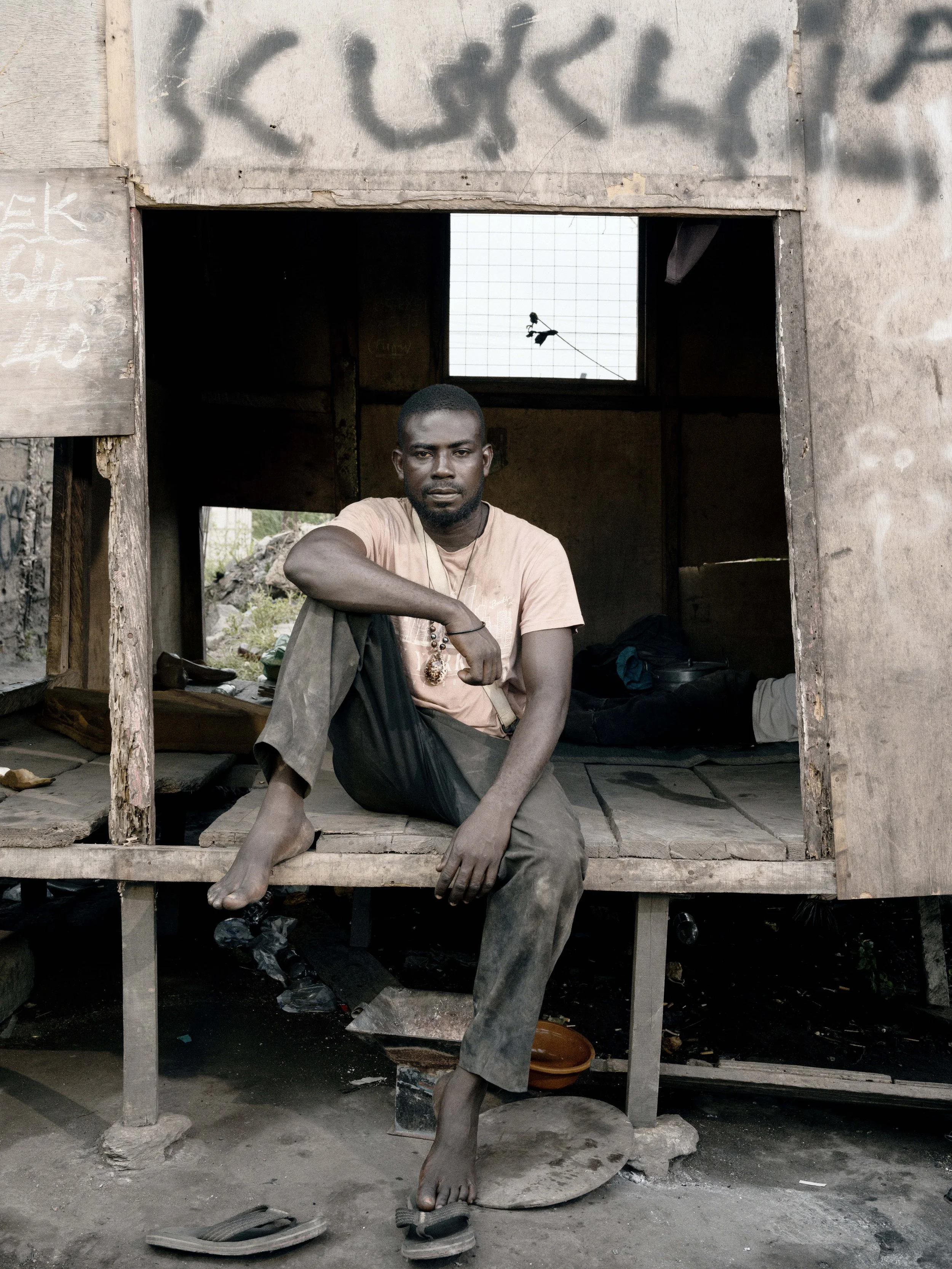
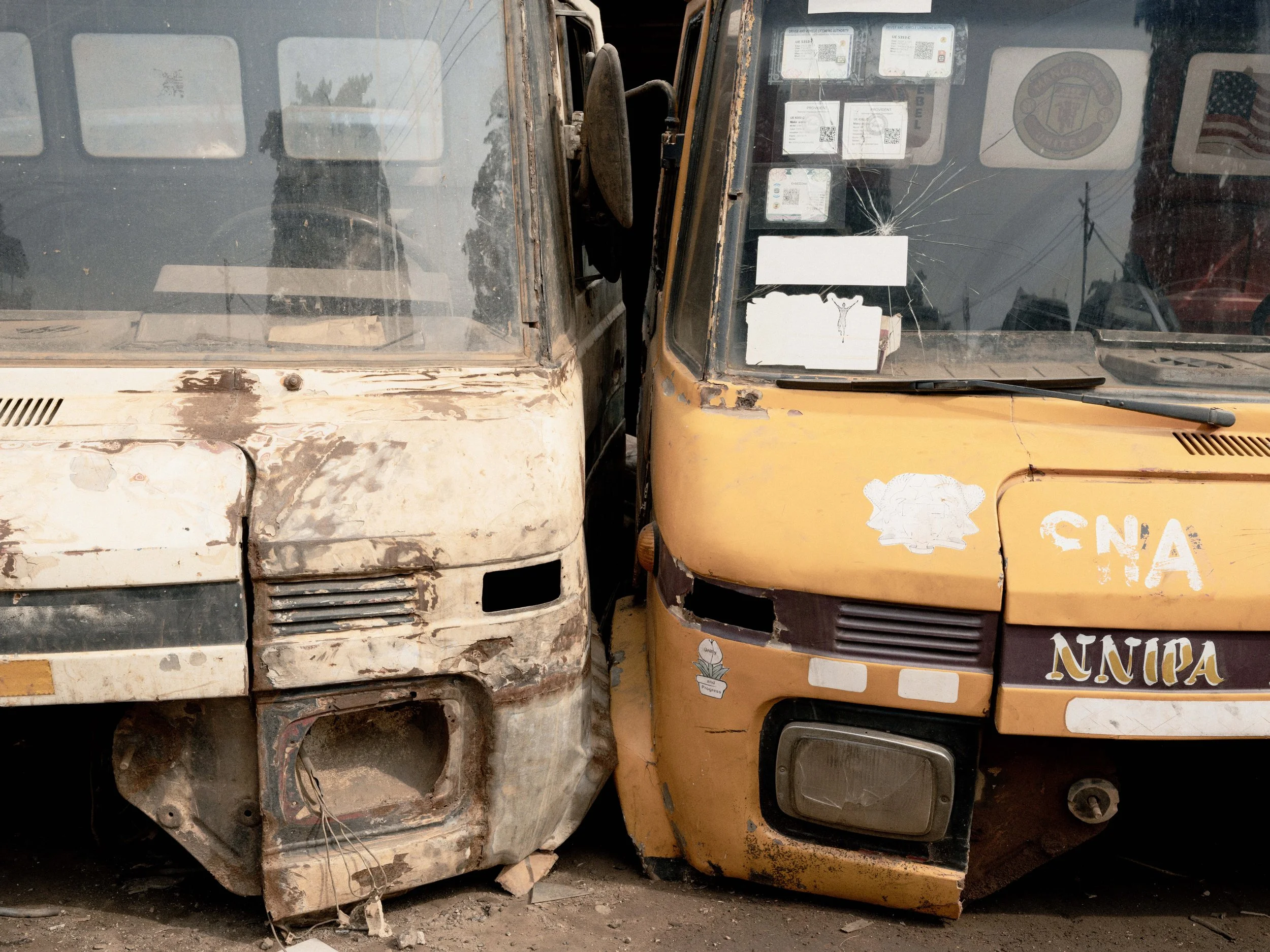
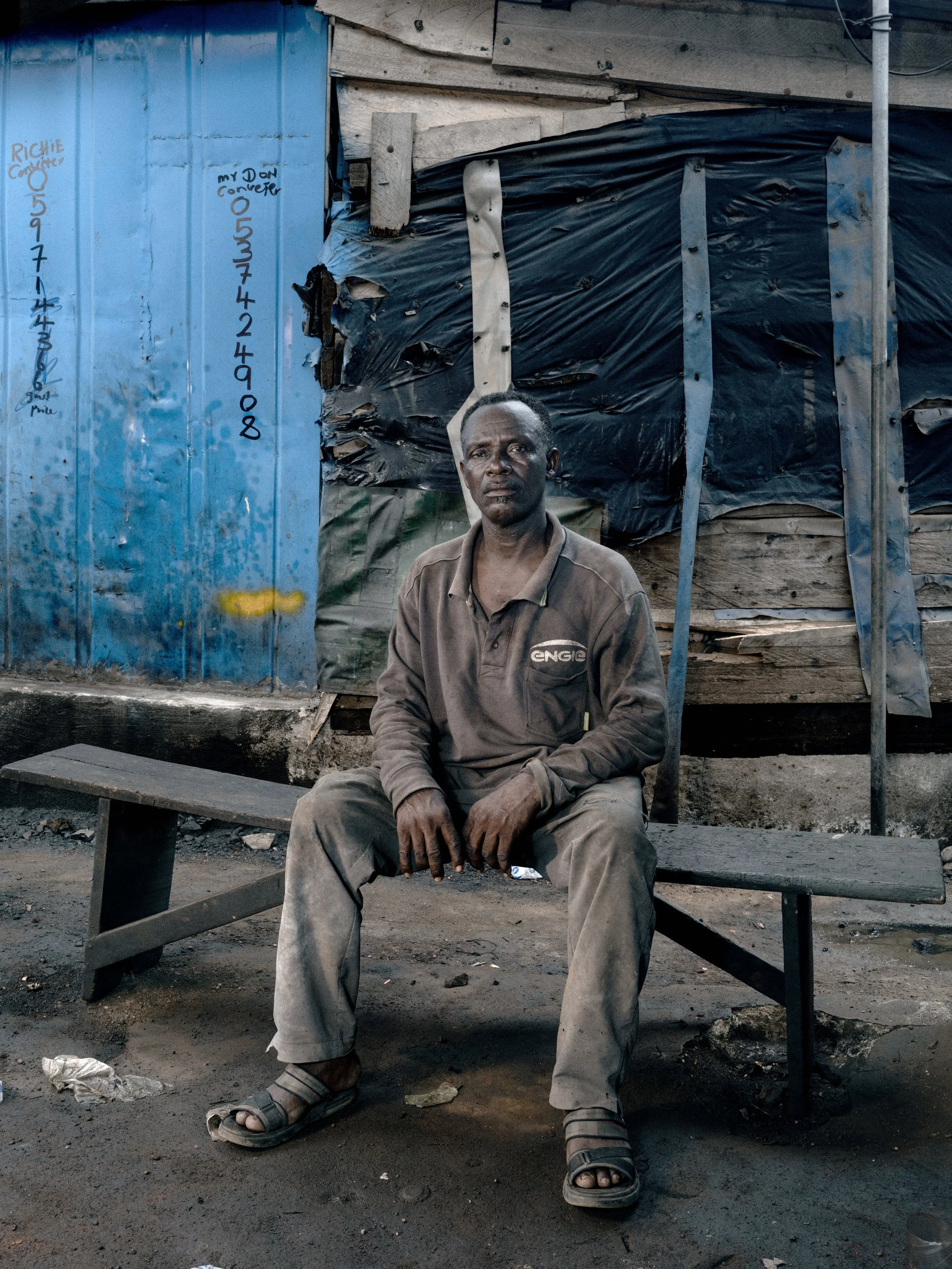
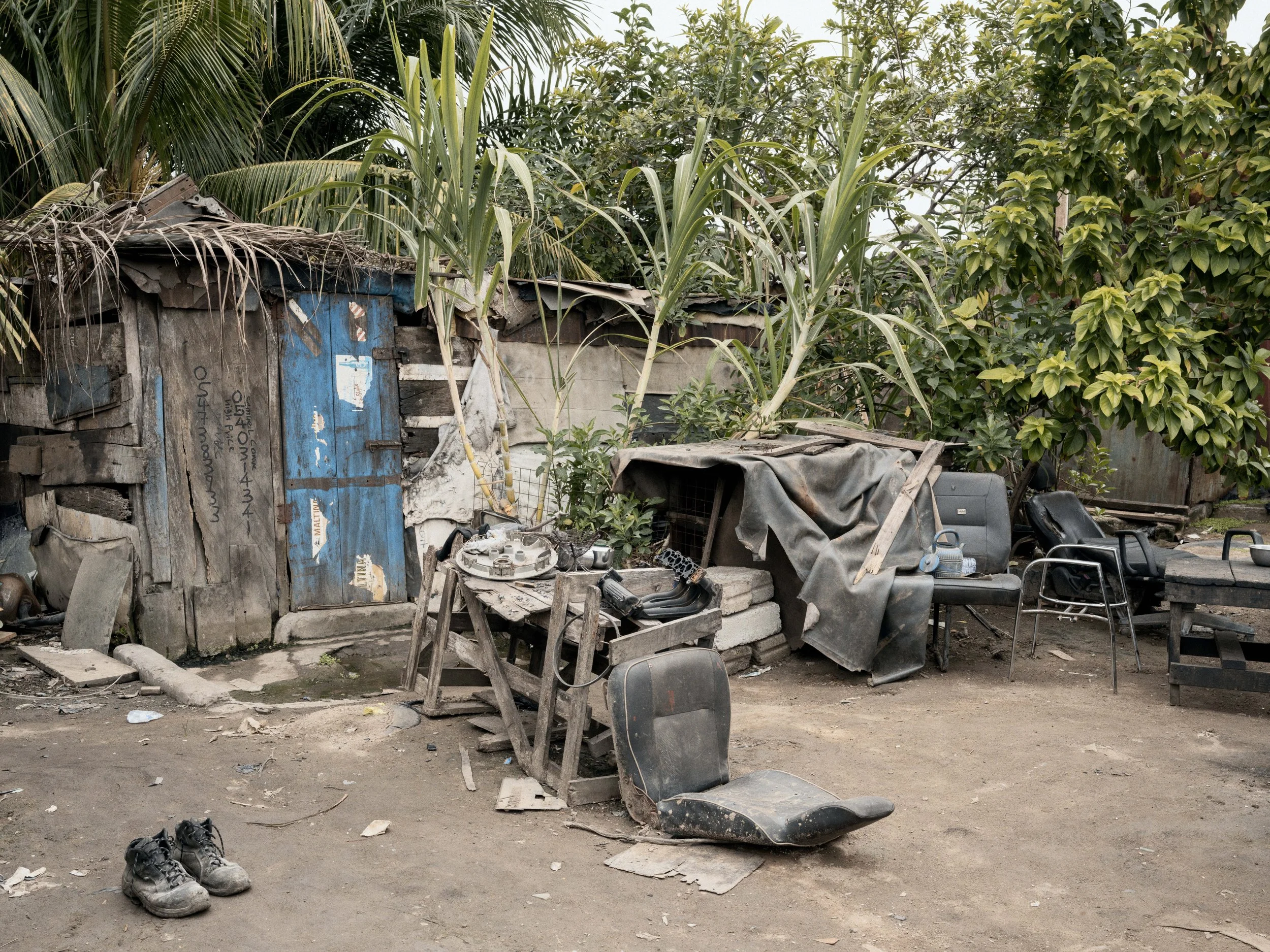
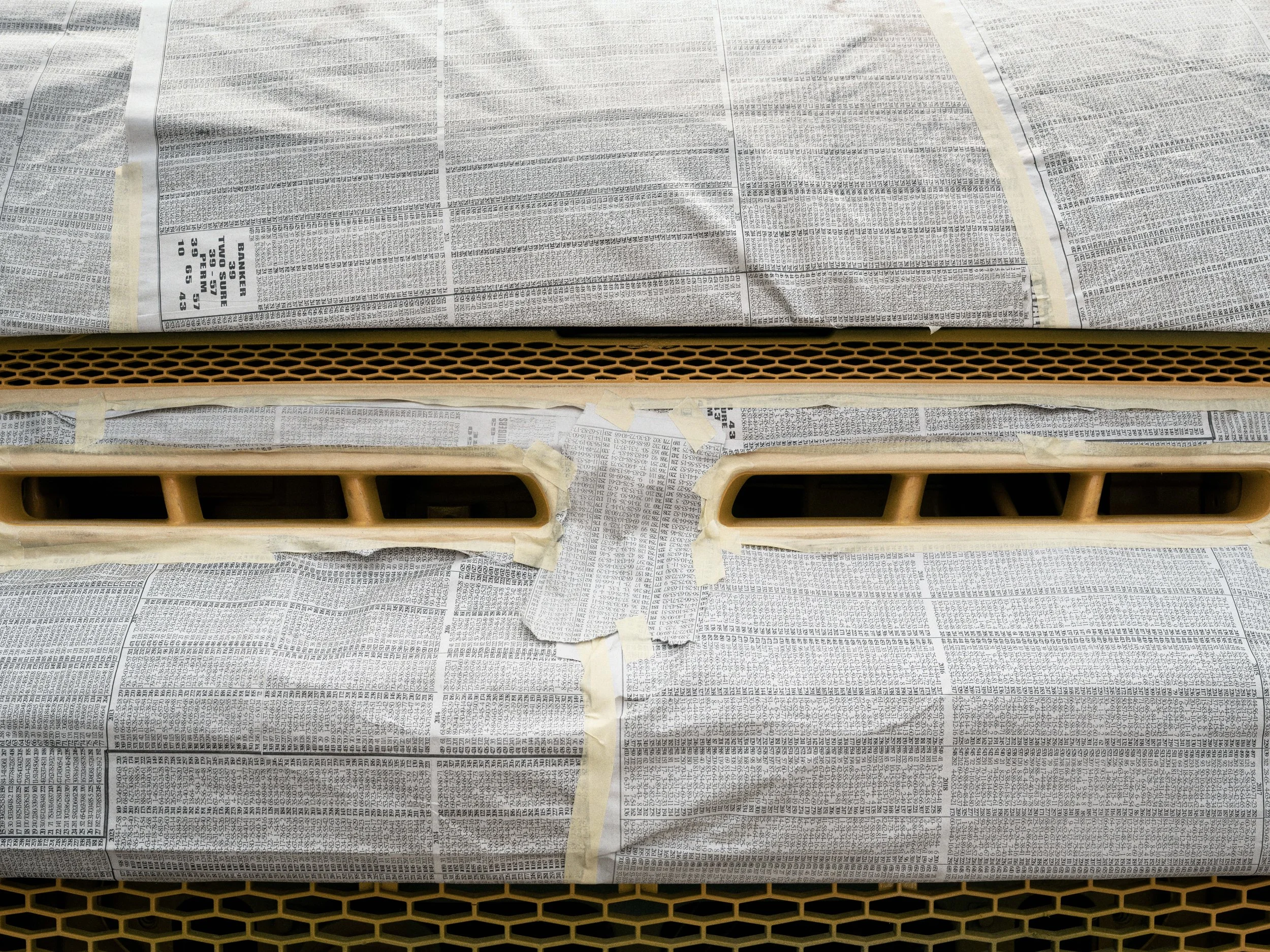
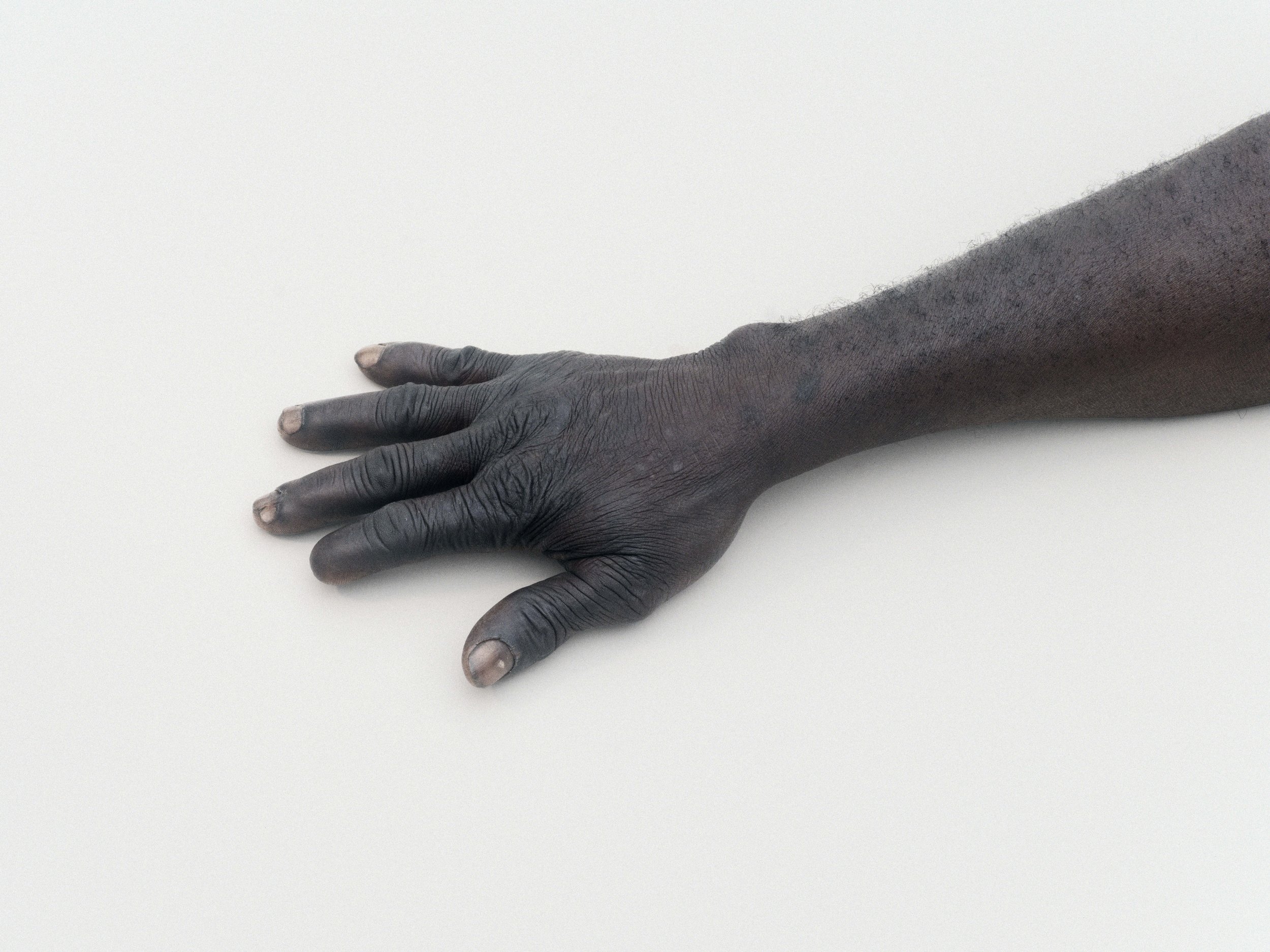
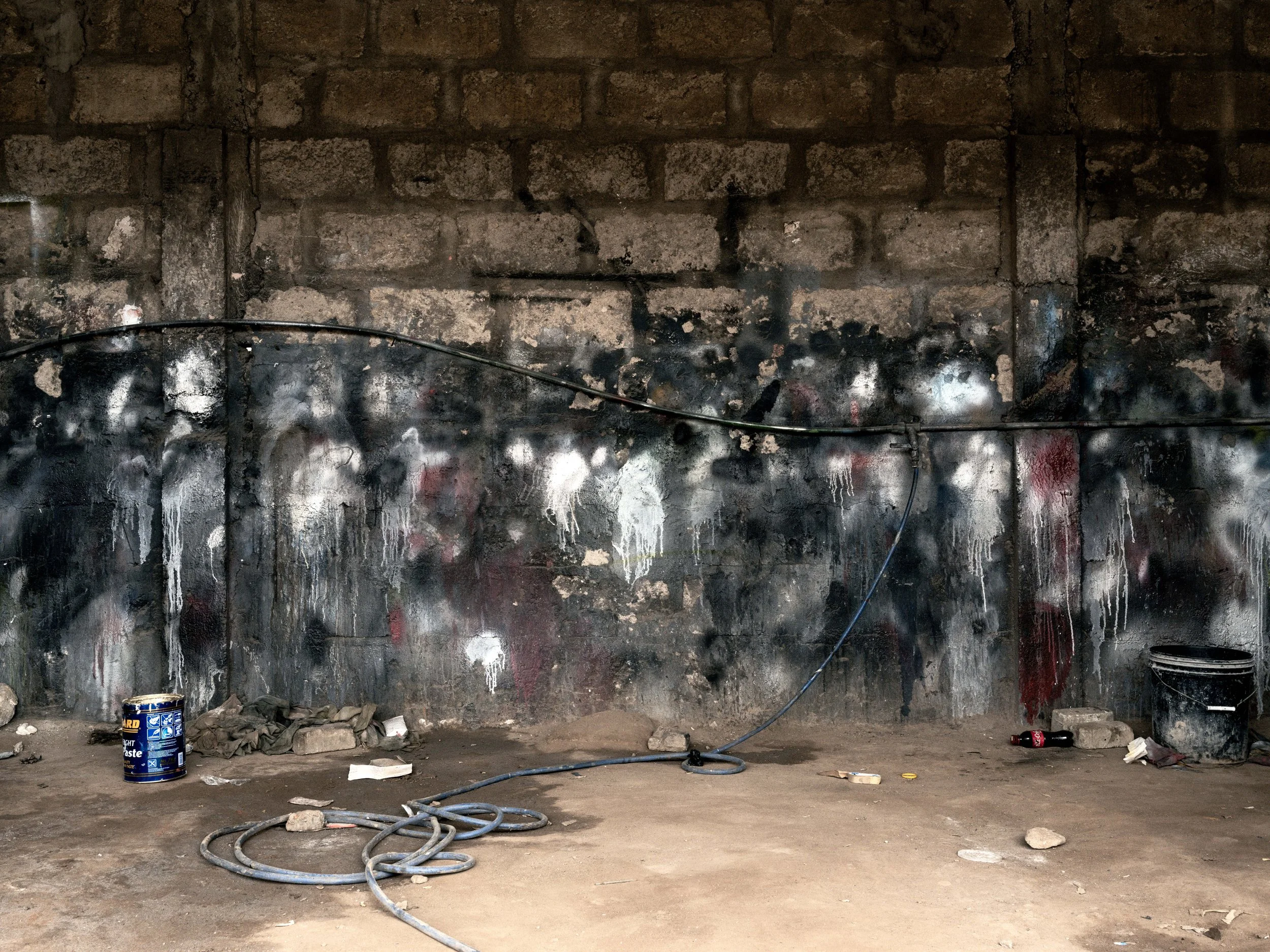
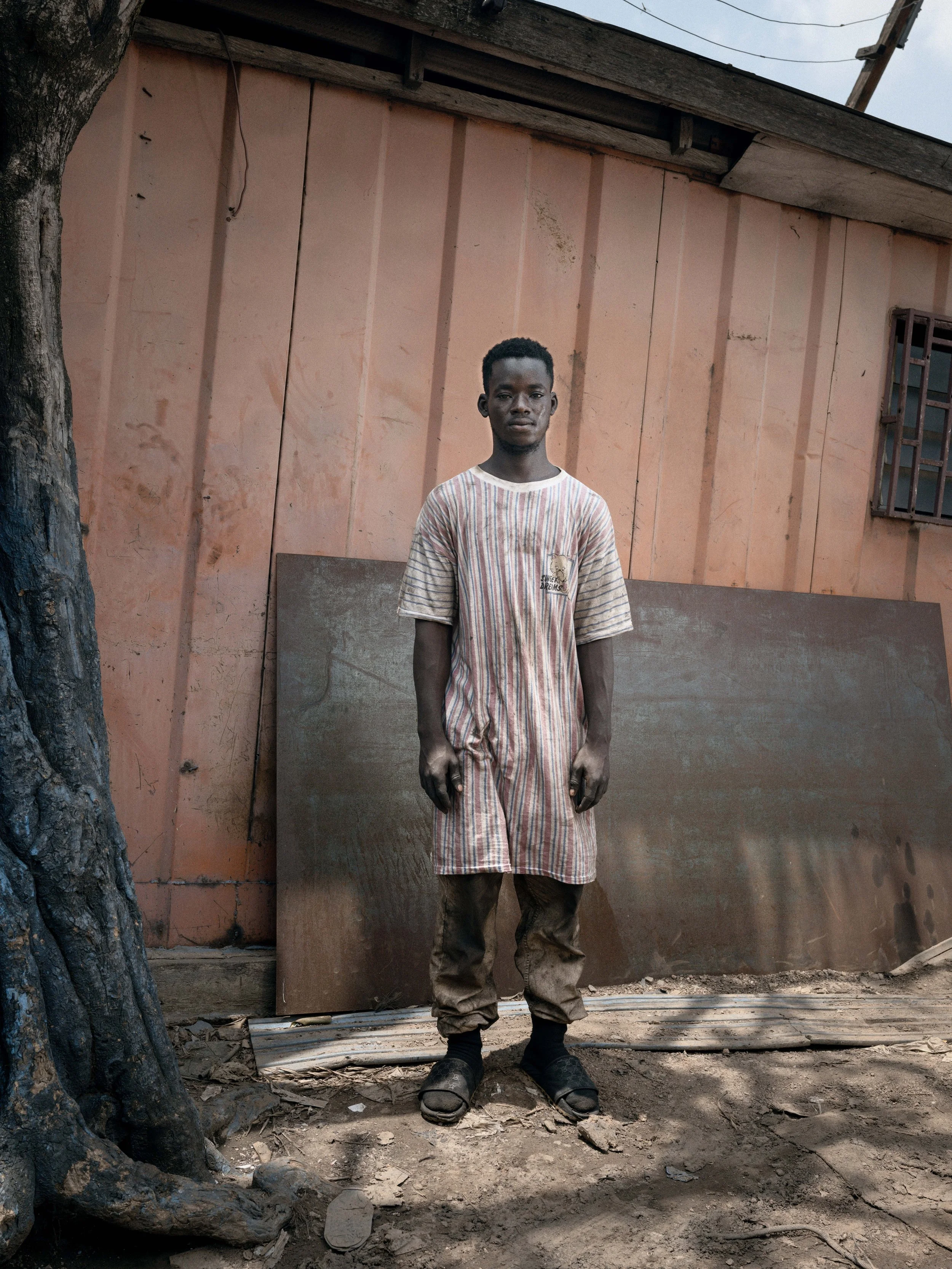
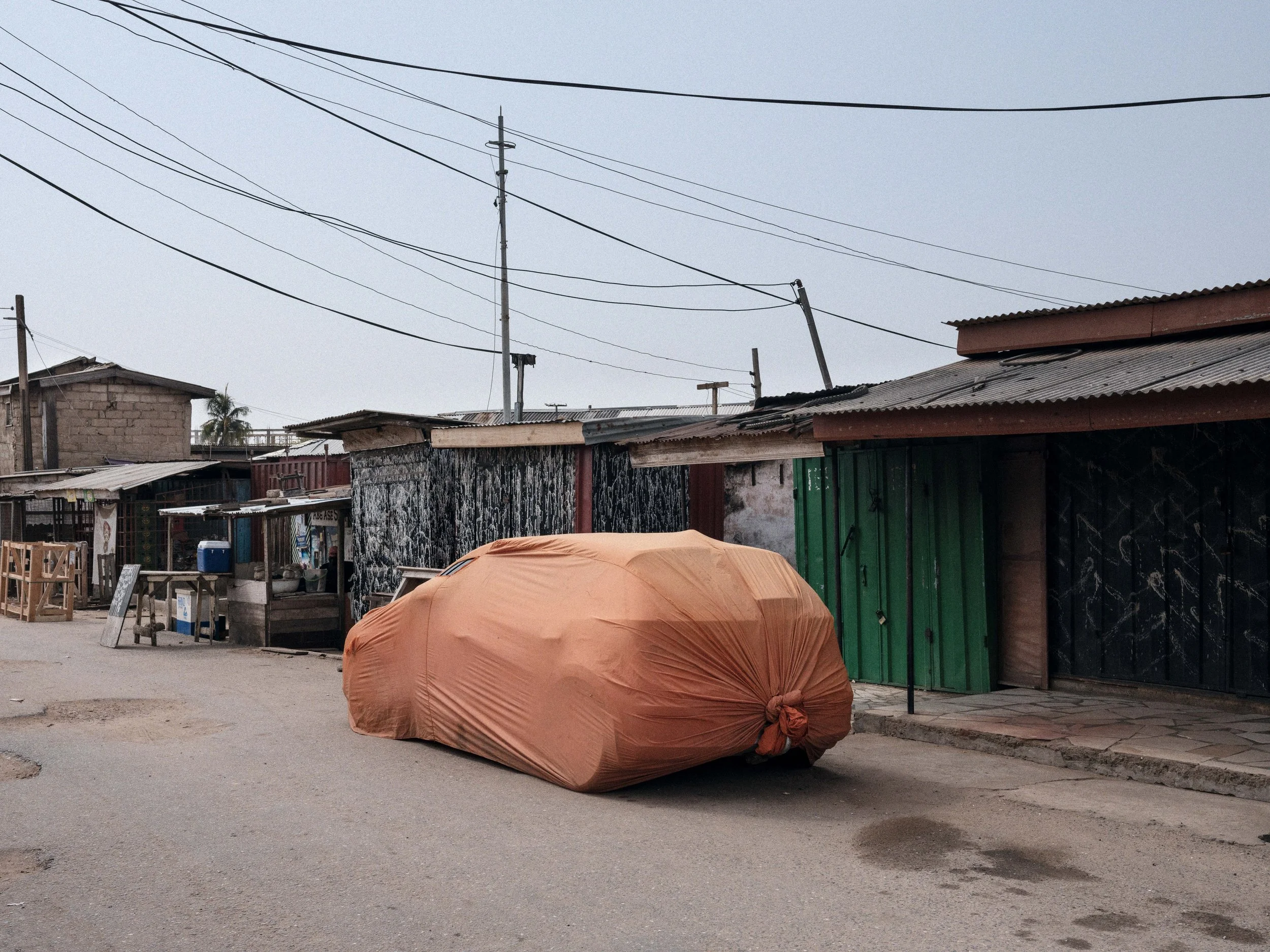
Ɛhyɛn City embodies a West African alter ego to the iconic American Motor City. Here, No gleaming new automobiles rolling off automated assembly lines; but instead, vehicles destined for the scrapyard get another lease on life through the ingenuity of an intricate network of mechanics, garage owners, importers, and resellers. This singular recycling practice stems from need, rather than a formal ecological program, yet engenders a form of sustainability — built with limited resources, uninhibited creativity, and tireless energy by craftsmen who, with their hands alone, delay obsolescence.
From their workshops, these artisans produce composite vehicles — amalgamations of heterogeneous parts — evoking the grand gestures of Nouveau Réalisme or Arte Povera. Much like César’s compressions or Duchamp’s assemblages, these ‘frankencars’ probe the boundary between repair and creation, necessity and art. Born from scarcity, they reveal a deeper level of humanity, often missing from consumerist societies: fixing instead of dumping, transforming, rather than merely replacing.
Yet, this knowhow is gradually jeopardized by the increasing supply of hybrid and electric vehicles, many produced at low cost in China. Workshops once at the heart of this circular economy now see their roles eroded. Ɛhyɛn City preserves a living memory, a testament to a moment when scarcity paradoxically bred sustainability. But how much longer can this African Motor City endure, before its gestures, its sounds, its craftsmanship become mere archival material? And more broadly: What shall we do with our surplus, when the places that reinvent it fade away, one by one?
ƐHYƐN CITY (2025)